THE METHOD OF WRITING A SHORT FILM SCRIPT: THE POWER OF A SINGLE SHOT
Writing a short film script is not about shrinking a long story, but an art form that compresses all the strength of emotions and actions into a single moment. A short film is like a gunshot. There is only one chance to shoot, and that shot must hit the target. Every element—image, dialogue, sound, space—needs to focus on a central idea and a single course of action, without being redundant or convoluted.
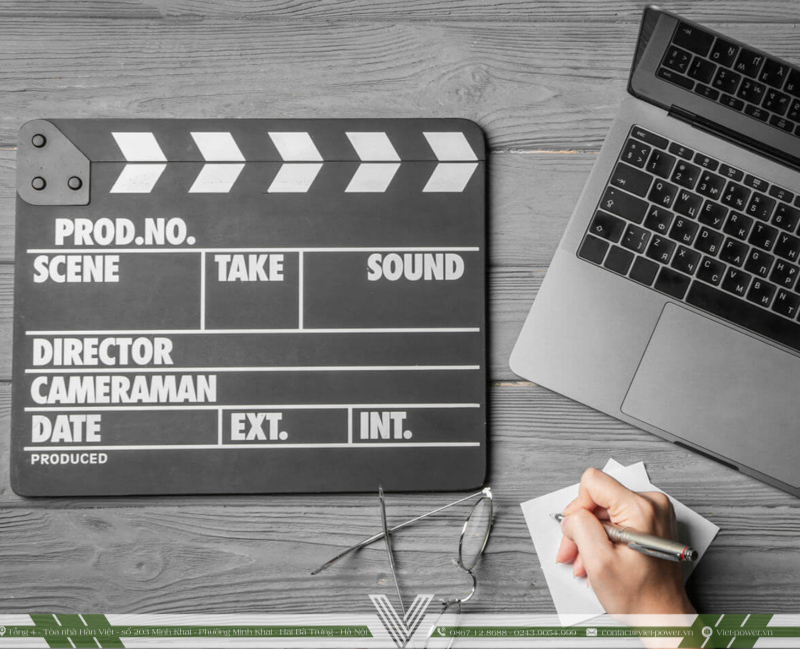
According to director Edward Dmytryk, cinema is the art of choice. A frame, a detail, a line of dialogue should only exist if it contributes to moving the story forward. Each scene in a short film is a force in the chain of momentum, leading up to the climax, much like pulling the trigger, holding your breath, and then firing. Therefore, before writing, filmmakers need to ask themselves: "What is my shot? What emotion do I want to hit in the audience?"
Seymour Chatman’s theory helps us understand that a cinematic story always consists of two parts: story (what is told) and discourse (how it is told). In a short film, the story must be concise—only one event, one choice, or one change. Discourse, or the way of telling the story, is where the writer can be creative: telling it backward, through memory, or from the perspective of a silent character. The manner of telling is what makes the small story memorable.
According to David Bordwell, narration in cinema is the process of distributing information—the audience is told "how much, when, and by what means." In a short film, controlling the flow of information is key to creating dramatic rhythm. A detail that appears early can be a setup for a final twist. When the audience knows less than the character, we create mystery; when they know more, we build tension. The entire process is like calibrating the force and direction of the bullet—the more precise, the greater the emotional impact.
Paul Simpson calls point of view the “ideological system of perception.” In a short film, the point of view determines how the audience perceives the world. If told from an outsider’s perspective, there’s objectivity; if from within the character, we get empathy and ambiguity. The film The Black Hole (Phil & Olly, 2008) lasts only a few minutes, but by linking the perspective to an office worker slowly consumed by greed, it makes the audience feel both curious and terrified—and in the end, realize they share that same instinct.
Visually, Lubomir Kocka suggests that the director must design a "visual concept"—a dominant image throughout, like a thread weaving through the emotions. This could be a recurring object, a symbolic light, or a movement that sets the rhythm of the whole film. For example, in Paperman (Disney, 2012), the image of a flying paper appears throughout—both as a storytelling tool and a symbol of fate. An effective short film doesn’t need many words; it needs images that speak for themselves.
All these principles boil down to one point: absolute focus. A short film script has no room for randomness or lengthy romance. Every detail must aim at one goal: clarifying conflict, pushing action, or unlocking emotions. If that shot strays off course, the film loses its rhythm; if it fires too early, the emotion falls short; but if the tension is just right and it fires at the right moment, that explosion will resonate in the audience's heart.
The Silent Child (Chris Overton, 2017) is a perfect example: in just ten minutes, it tells the story of a deaf girl who learns sign language for the first time. There's no noisy climax, just one moment of silence, but that touch moves the audience to tears. The shot here is not in the action but in the awakening of awareness—a place where emotions are compressed and then fully released.
In conclusion, writing a short film is the art of concentration and emotional compression. Choose a significant moment, a clear point of view, a central image, and let all other details revolve around it like orbits around a nucleus. A successful short film doesn’t succeed by telling more, but by making the audience remain silent long after the screen goes black, as if the echo of that shot still lingers in their minds.

REFERENCES
Alber, J., Nielsen, H. S., & Richardson, B. (Eds.). (2013). A Poetics of Unnatural Narrative. Columbus: The Ohio State University Press.
Bordwell, D. (1985). Narration in the Fiction Film. Madison, WI: The University of Wisconsin Press.
Caughie, J. (Ed.). (1981). Theories of Authorship: A Reader. London & New York: Routledge / British Film Institute.
Chatman, S. (1978). Story and Discourse: Narrative Structure in Fiction and Film. Ithaca & London: Cornell University Press.
Dmytryk, E. (1988/2019). Cinema: Concept & Practice. New York: Routledge.
Kocka, L. (2019). Directing the Narrative and Shot Design: The Art and Craft of Directing. Wilmington, DE: Vernon Press.
Küchler, S., & Carroll, T. (2021). A Return to the Object: Alfred Gell, Art, and Social Theory. Abingdon, UK: Routledge.
Simpson, P. (1993). Language, Ideology, and Point of View. London & New York: Routledge.