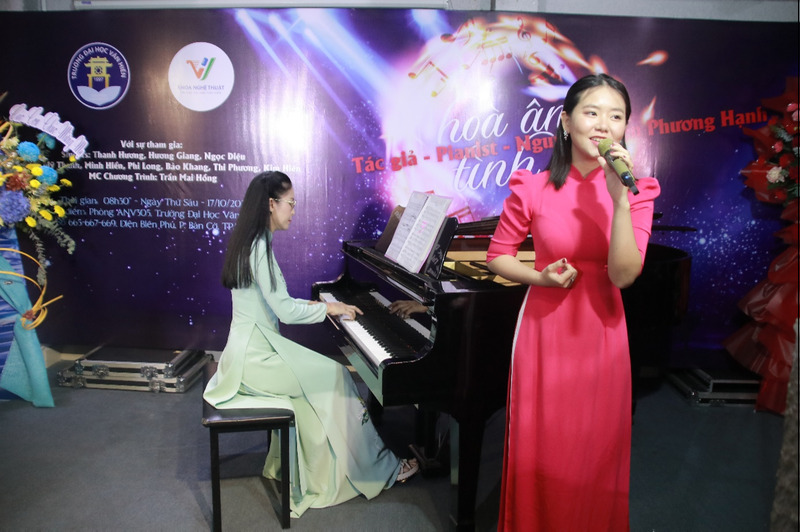
AUTHOR NGUYỄN THIỆN PHƯƠNG HẠNH: HARMONIES OF THE NATIONAL SOUL AND FAMILY LOVE
Educator and pianist Nguyễn Thiện Phương Hạnh stands out as a distinctive figure in Vietnamese music. Beyond being an accomplished pedagogue who has devoted more than three decades to nurturing generations of talented pianists, she is also a composer with a uniquely personal creative journey—one that draws inspiration from the most genuine emotions: family love and the cultural identity of the nation.
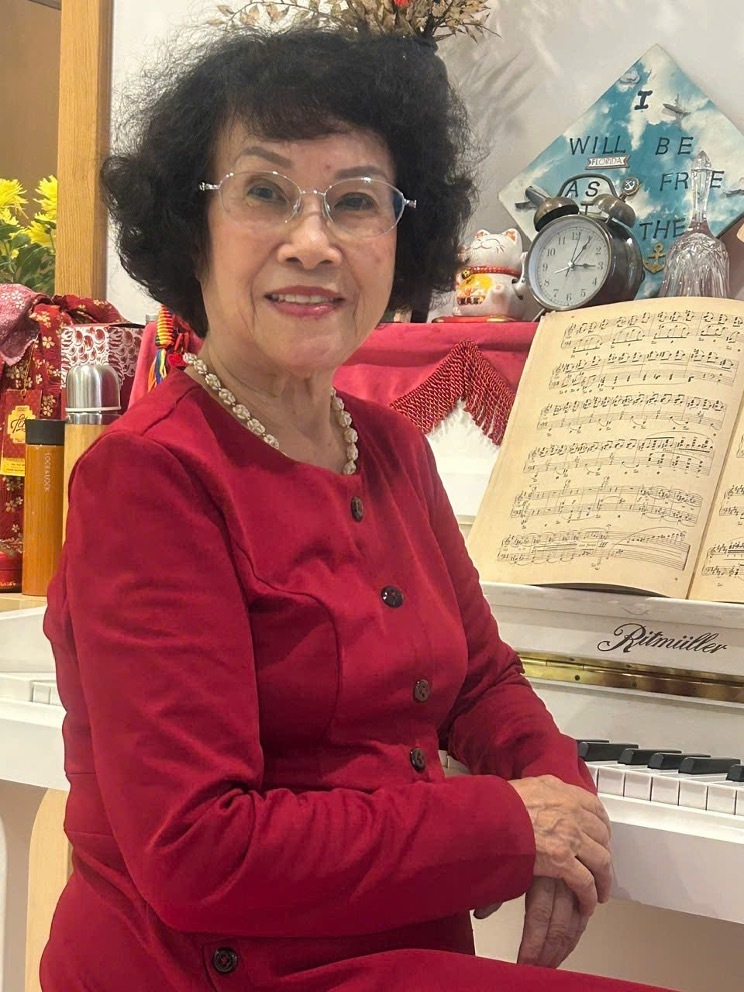
A pedagogical journey that built a lasting foundation
Phương Hạnh’s artistic and educational path has profoundly shaped her compositional voice. After studying at the National Academy of Music in Sofia, Bulgaria, under the guidance of renowned Professor Dora Lazanova—a direct descendant of the famed piano tradition of Heinrich Neuhaus—she returned to Vietnam and went on to serve as a lecturer, and later Vice Head of the Piano Department at the Ho Chi Minh City Conservatory of Music for 24 years (1978–2002).
Her extensive teaching experience—from beginner to university level—laid a solid foundation for her musical thinking. Notably, her major contributions to compiling and developing the Piano Department’s teaching curriculum at the Conservatory are still in use today. This not only demonstrates strong professional expertise but also reflects a deep understanding of structure, pedagogy, and musical continuity.
Her role as an educator also expanded internationally. She was among the pioneers who brought Vietnamese students to compete and gain exposure at a wide range of international piano competitions and festivals in the United States, Italy, France, Hungary, and Shanghai—earning numerous prestigious awards along the way. This unwavering mentorship and passionate encouragement helped shape an artist’s soul that consistently seeks to convey musical beauty and refinement with both effectiveness and emotional depth.
The creative process: born from pure love
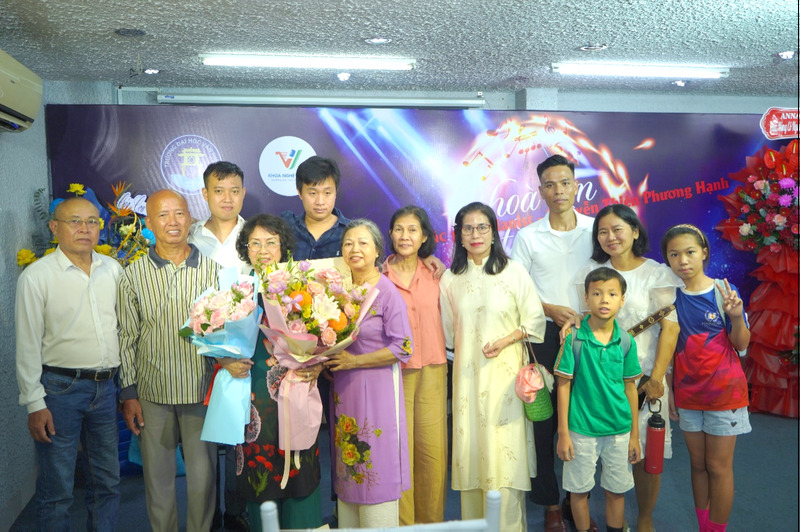
What makes Phương Hạnh’s compositional journey especially moving is its origin in the simplest and most intimate of inspirations: her love for family and grandchildren.
Most of her first four works in the program “Hòa Âm Tình Yêu” (such as Nhớ Qun Qun, Ui, A Gừ Bà Yêu, Nhớ Mina, Oliver, Chú Johan Hannes, Ếch Xanh, and Leslie) were written as musical gifts for her six beloved grandchildren—children she personally cared for and raised from their earliest days, keeping affection and longing constantly present in her heart. When asked about her compositional themes, her response is humble yet profound: “Whatever is in my heart, I write it as it is. Memories stay forever deep in my heart—nothing can replace them.”
This creative approach is not a search for grand, abstract themes, but a musical re-creation of an entire childhood sky. Her melodies feel natural and close to everyday life—gentle lullabies, clear and peaceful soundscapes. The birth of these works reflects her artistic philosophy: true art must come from honest emotion, transforming ordinary moments and personal vibrations into a shared spiritual legacy.
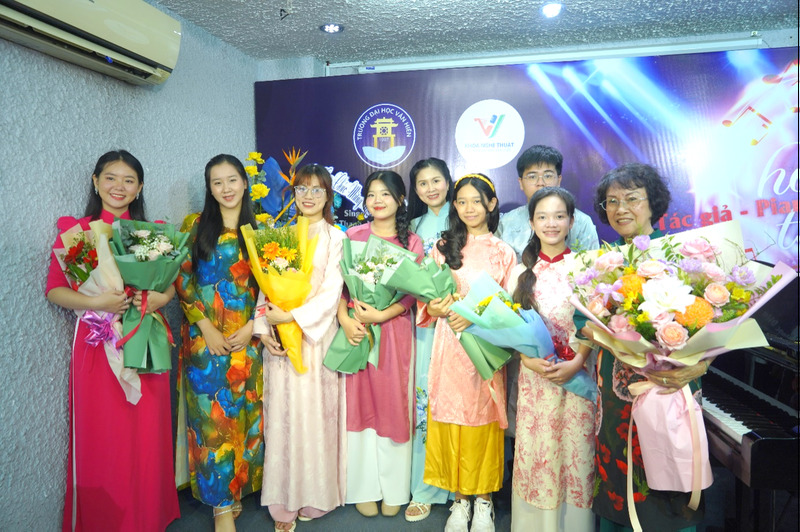
Creating with national identity: Vietnamese harmony
Though trained professionally in the Western classical tradition, Phương Hạnh’s Vietnamese spirit and cultural identity remain inseparable from her—like breath itself. Her compositional signature is marked by a consistent use of Vietnamese folk materials.
Born in Nam Định, she skillfully weaves familiar folk tunes—melodies that reflect Vietnamese landscapes and people—into her harmonies and musical lines. Works such as the Sonatine “Lý Cây Đa” (excerpted from the suite Góc Ấu Thơ) or Two-Part Invention No. 1, which draws on the folk material Inh lả ơi, offer clear evidence. This is not merely a harmonic technique; it is a return to origins—where she reconstructs the lullabies of her grandmother and mother on sweltering summer afternoons, rich with Vietnamese timbre and soul.
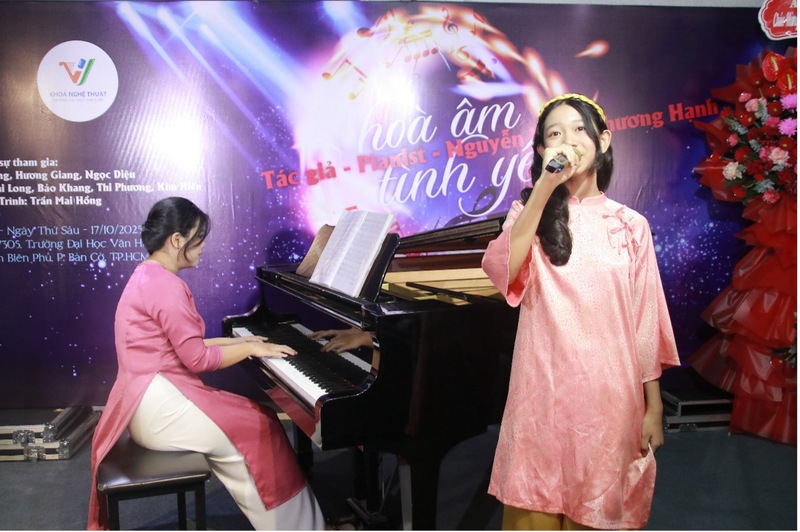
The diversity of her creative output also appears in works written for students (such as Hoa Bảy Sắc Cầu Vồng, dedicated to pianist Bảo Trâm), as well as in compositions that celebrate national courage (Cùng Nhau Đi Hồng Binh, march-like in character, interwoven with elements of Lãnh Tụ Ca). Meanwhile, Bông Xanh carries the full spirit of the Vietnamese character—simple, dignified, and resilient.
Her admiration for literature also leads to cross-disciplinary creativity, as she set to music three enduring poems by poet Phùng Quán: Hoa (Flower), Trăng (Moon), and Cây Xương Rồng (The Cactus). This demonstrates that Phương Hạnh is not only a pianist and composer but also a lover of poetry—someone who believes art is a bridge to Truth, Goodness, and Beauty, helping people live with greater kindness and hope.
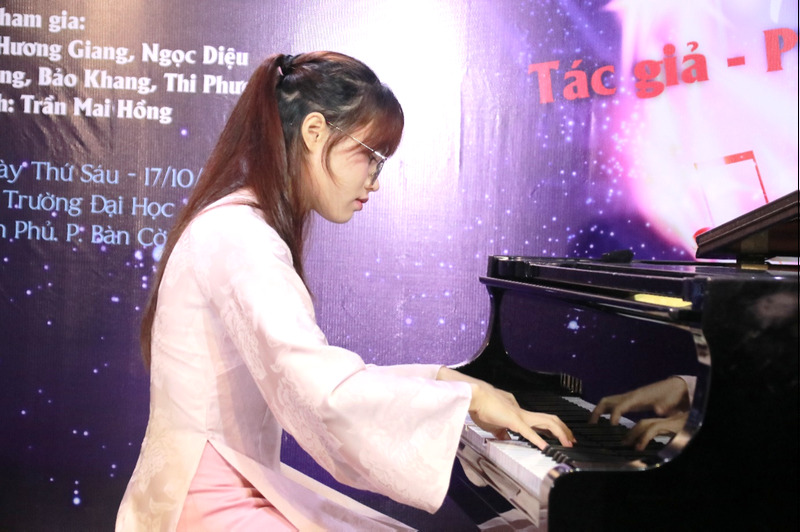
Ultimately, the compositional journey of Educator and pianist Nguyễn Thiện Phương Hạnh flows from two sacred sources: boundless family love and profound respect for national identity. From a piano in a friend’s ruined home—sparking the work Tiếng Dương Cầm Trong Căn Nhà Đổ—to tender lullaby-like notes written for her grandchildren, each piece is a life story, a professional journey, and a reflection on humanity, told through harmony. Phương Hạnh not only passes down the flame of artistry with intelligence and emotion, but also leaves behind a musical legacy that is warm, resilient, and enduring—one that will continue to illuminate the artistic path for generations to come.